


The Village Viewpoint: Unplugging Together Matters
On campfires, front porches, and what happens when the group chat goes quiet for a while.
Why Unplugging Together Matters
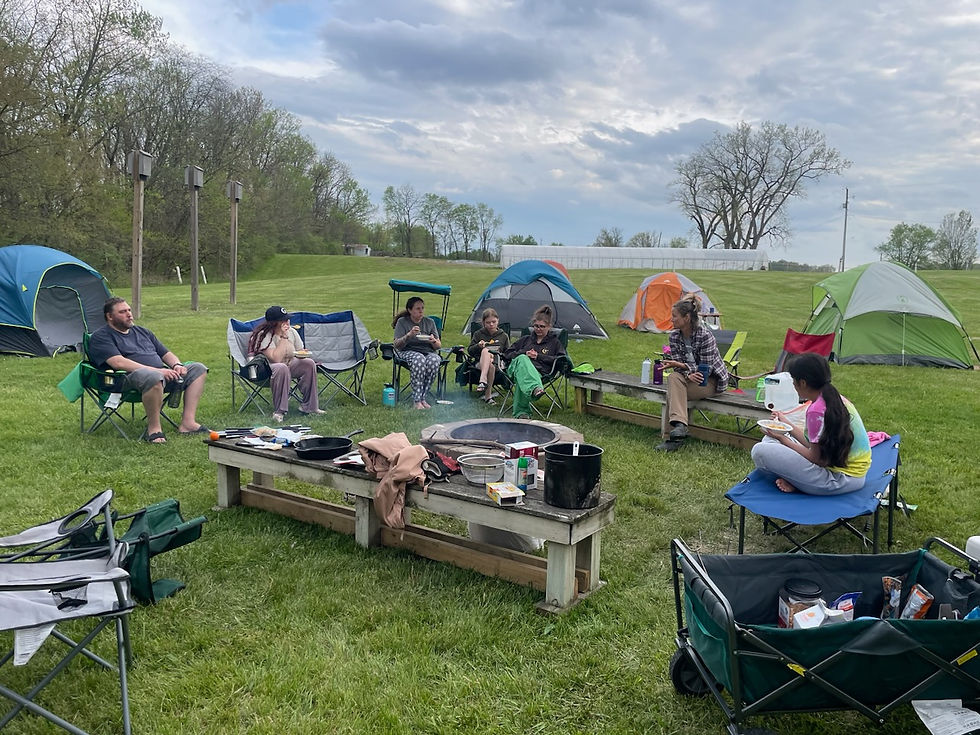
On campfires, front porches, and what happens when the group chat goes quiet for a while.
Something happens around a campfire that simply doesn't happen over text, or even over a phone call. Conversations slow down without anyone deciding to slow them down. People actually finish their sentences instead of trailing off mid-thought to check a notification. Silence stops feeling like something that needs to be immediately filled and starts feeling, instead, like part of the conversation.
Early October is a good time to notice that. The evenings are cooler, the fire pits are coming back out, and front porches get one last good stretch of use before winter pulls everyone indoors. It doesn't take a special event or a trip out of town. A backyard fire, a porch swing, a kitchen table after the dishes are done. What matters isn't the setting. It's the unhurried time, with no particular agenda beyond simply being together.

There's a reason time like this matters more than it might look like on paper, more than a bullet point on an annual report might suggest. Most of our daily interactions happen in fragments: a hallway greeting, a five-minute chat before a meeting starts, a comment thread that gets three replies before everyone moves on to the next thing. Those fragments matter, but they rarely go deep, because depth requires time, and time is exactly what a normal week almost never provides.
You can't rush a campfire conversation. That's exactly why it works.
An open evening changes the math entirely. Without a clock ticking down to the next obligation, conversations get room to wander somewhere unplanned. Someone mentions a hard year they've had, and instead of a quick sympathetic nod before moving on, there's actual space to sit with it. Someone tells a story about their grandfather that has nothing to do with SERVE Village's mission at all, and it turns out to be exactly the thing that makes two near-strangers feel like they've known each other for years.

There's also something to be said for what happens when phones lose their grip on a group, even briefly. A phone left face-down on the table, or better yet in another room, sounds like a small thing until you notice what fills the silence where scrolling used to live. People look up. People make eye contact during a conversation instead of glancing sideways at a screen. The natural rhythms of a shared physical space, cooking together, walking the block together, sitting around the same fire, reassert themselves once the digital pull weakens even a little.
This kind of unplugged, unhurried time builds a different kind of trust than a quick hello ever could. Trust that survives disagreement. Trust that remembers the person behind the position, the parent behind the volunteer, the whole human being behind the Neighbor you mostly know from committee meetings. You don't get that kind of trust from efficiency. You get it from time that has nowhere urgent to be.
And the good news is that none of this requires a retreat center, an overnight stay, or a weekend away to apply. The same principle scales down to something as small as a single meal.
This week: Put your phone somewhere else, another room, a drawer, the bottom of a bag, during one meal with a Neighbor or family member this week. See what the conversation does with all that extra room to breathe.


Comments